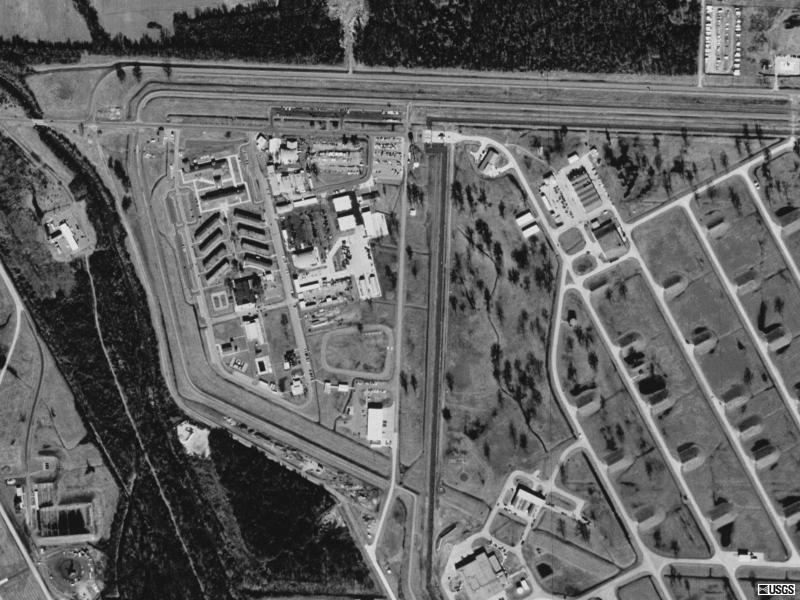
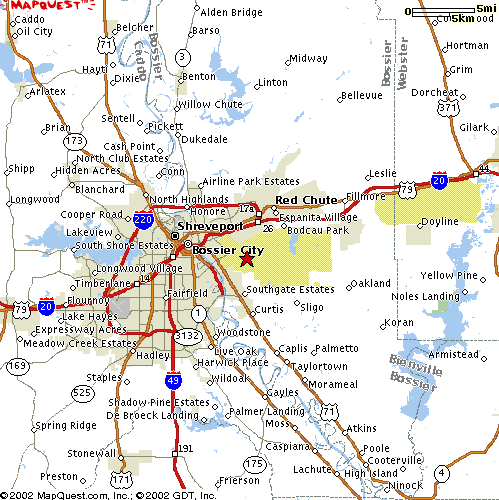
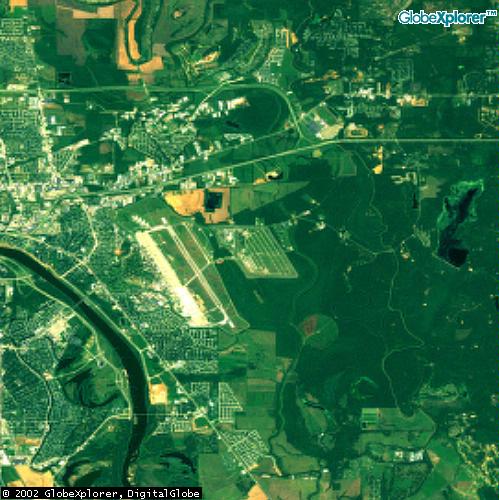
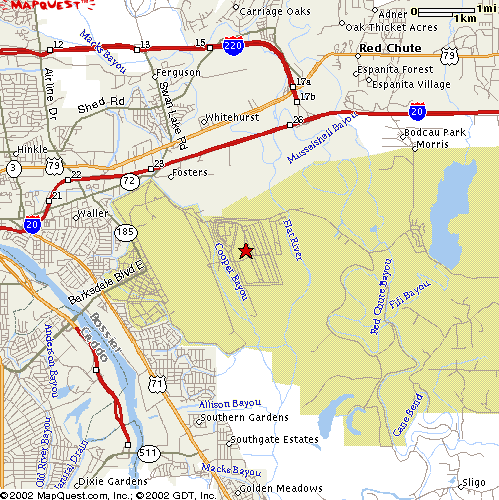
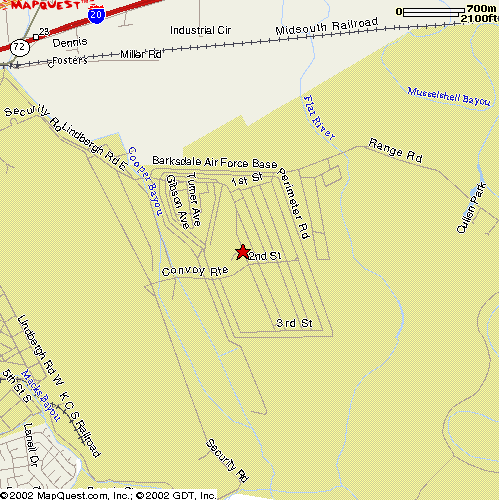
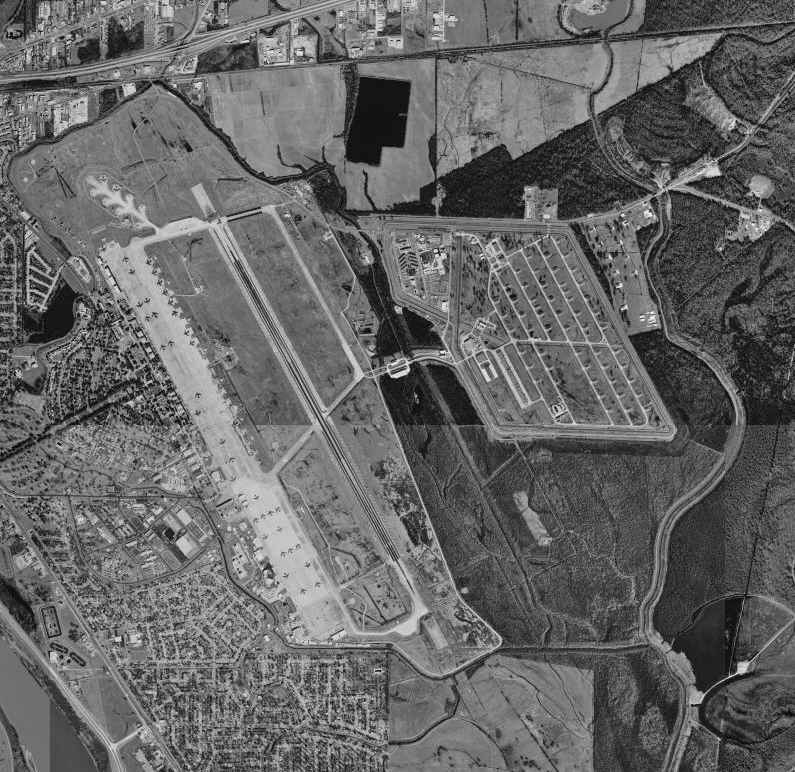
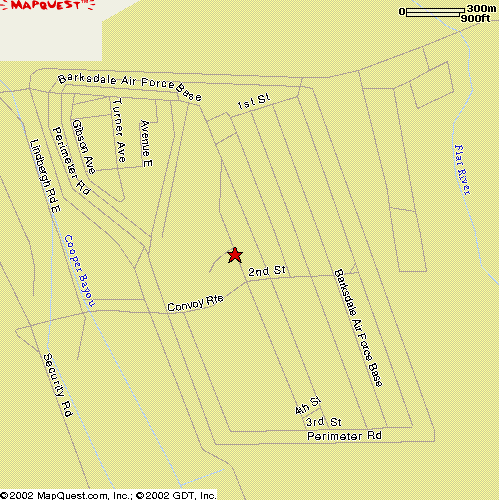
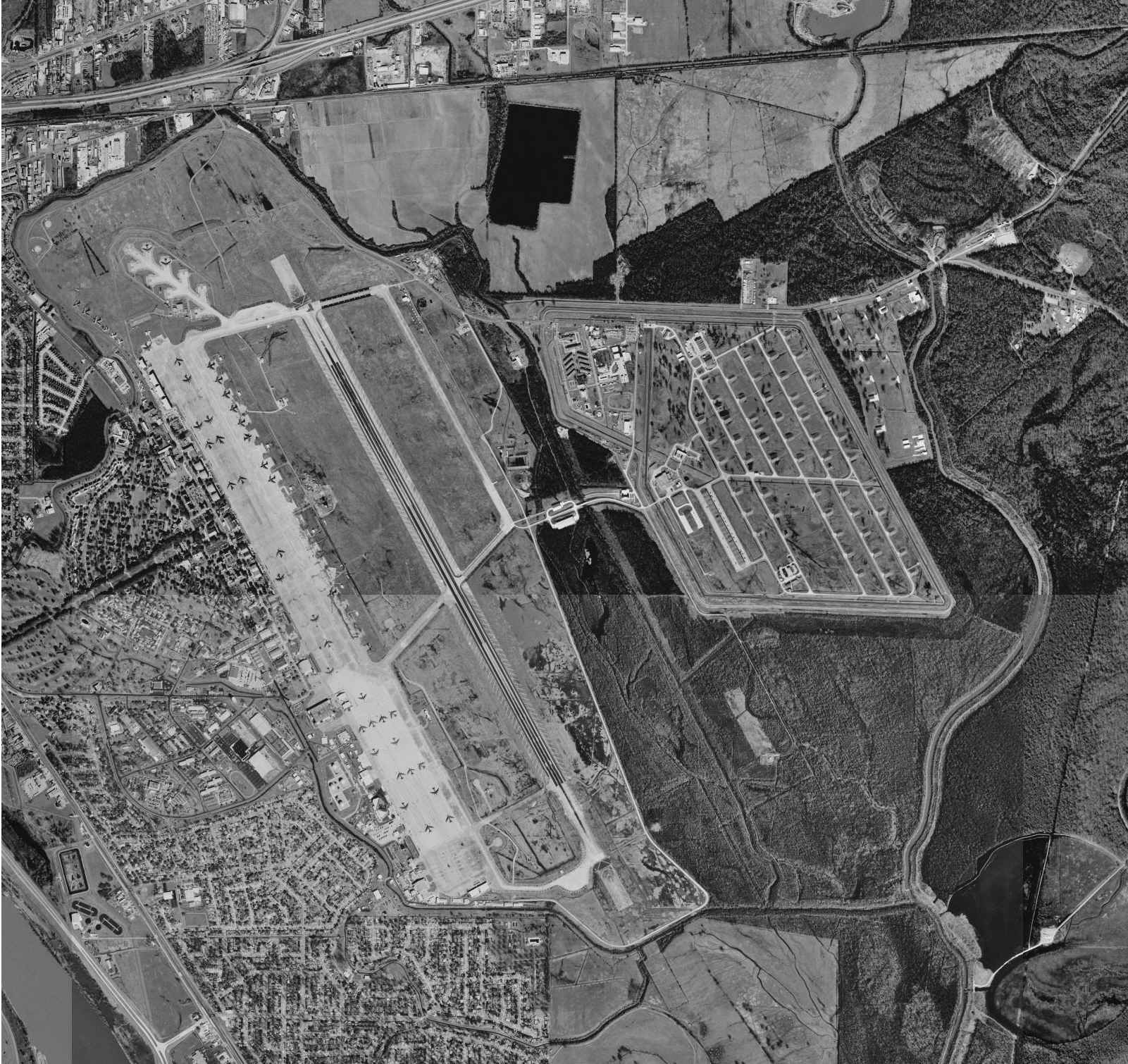
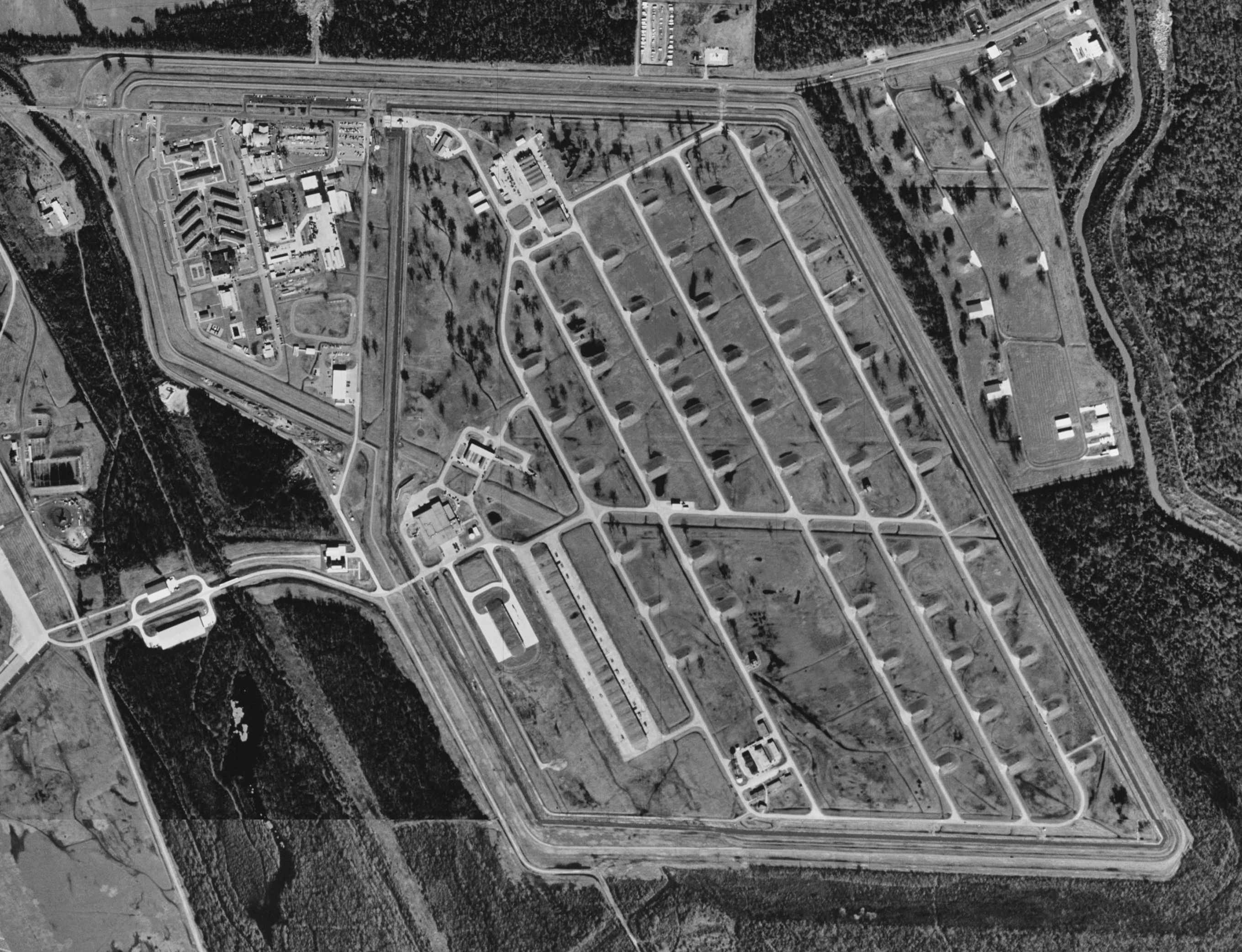
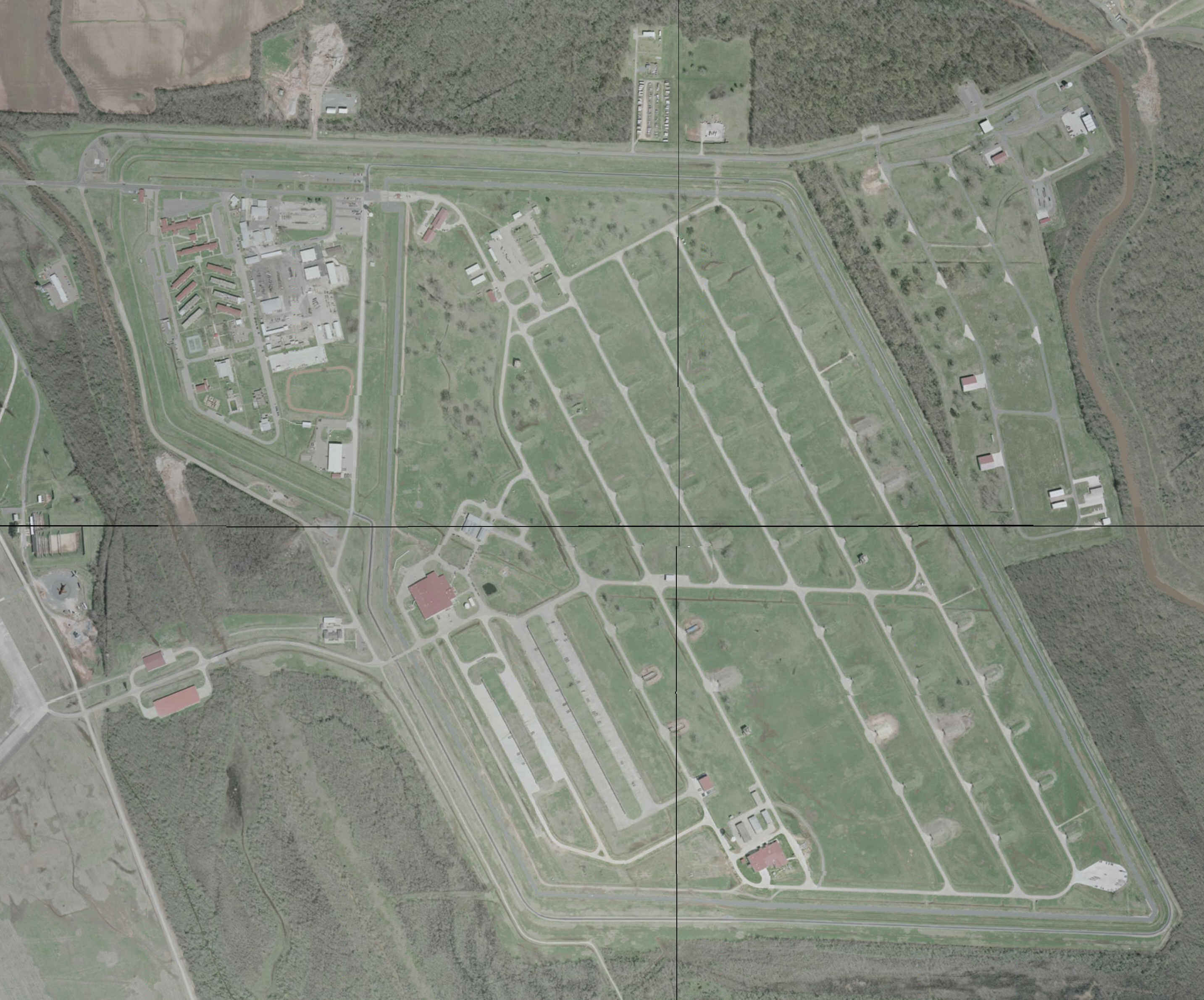
14 December 2003. Add color aerial photo of nuclear weapons
storage area (WSA), downloaded today from Mapquest.com. This high resolution
aerial was not available from Mapquest on 19 June 2002.
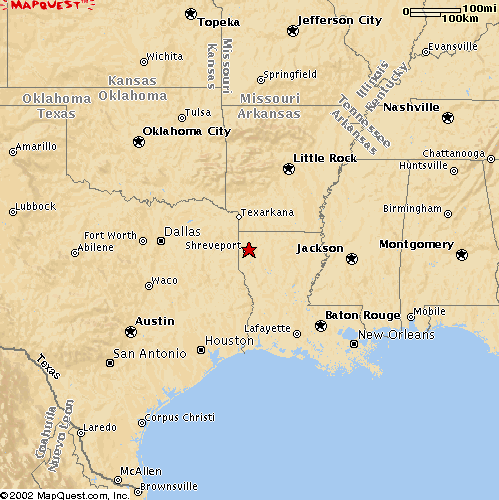
19 June 2002
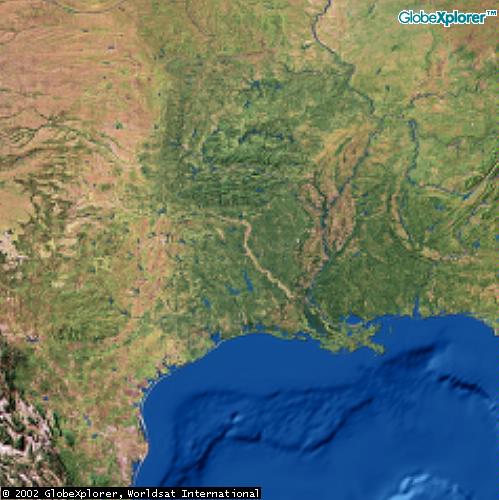
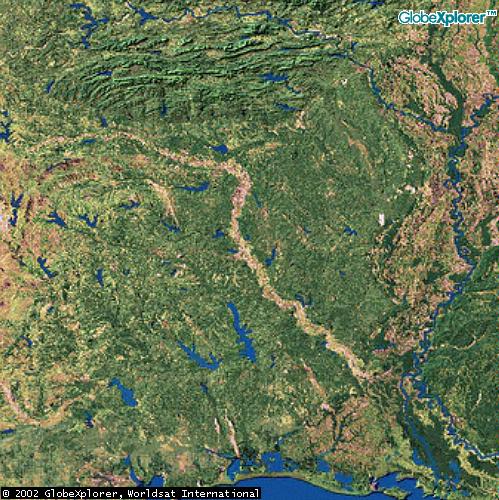
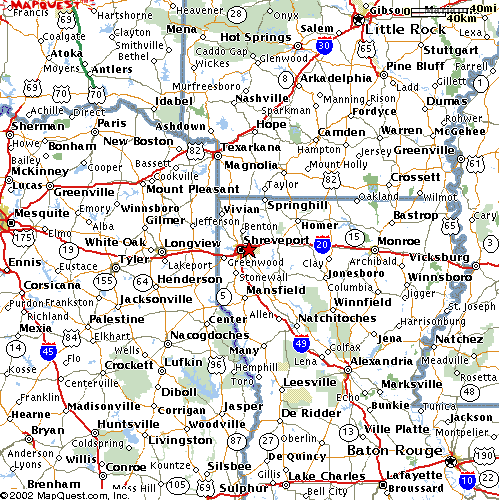
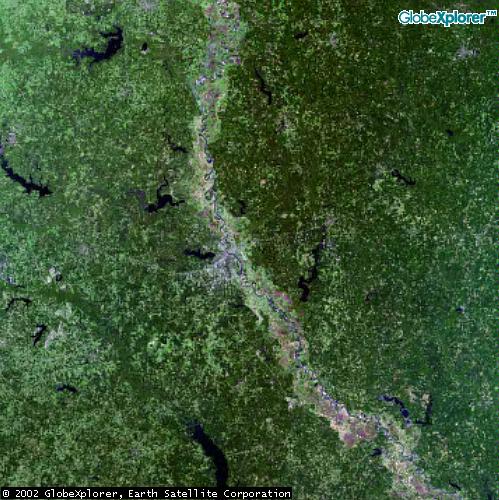
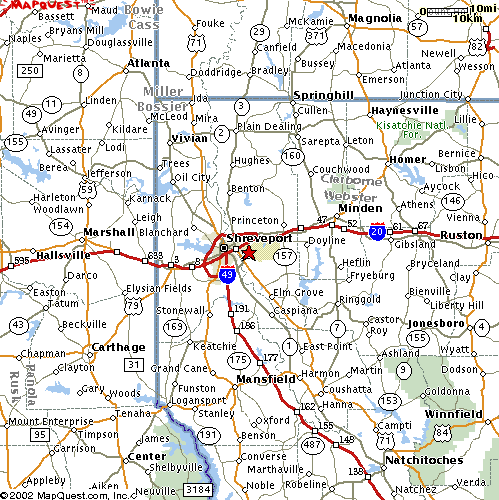
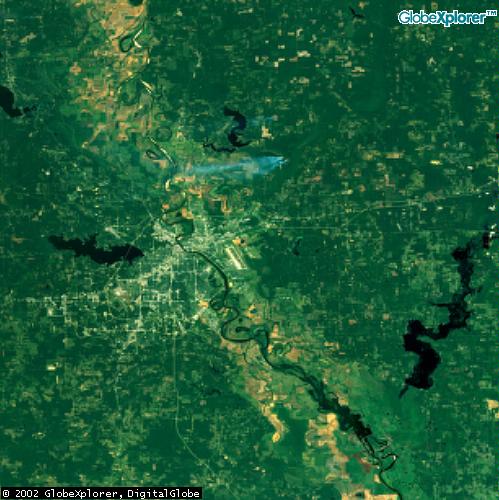
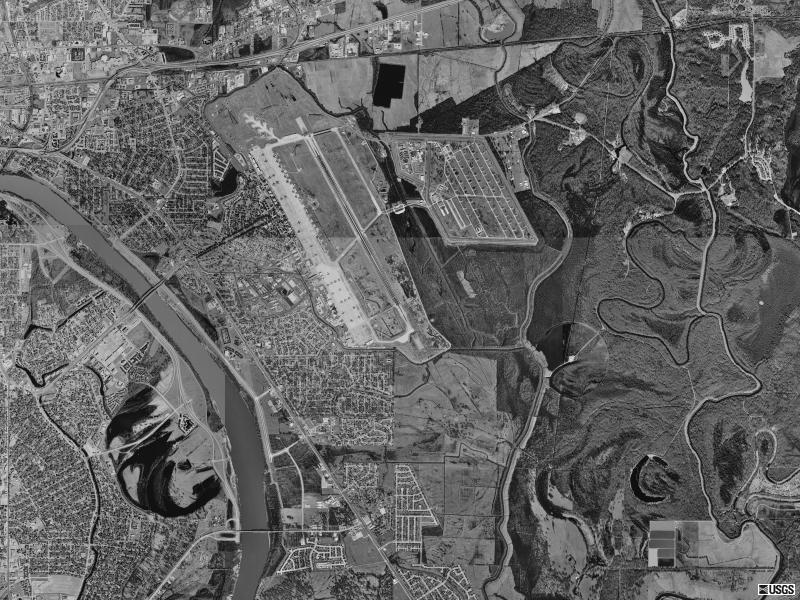
Source of maps and photos: Mapquest.com
(color) and TerraServer
USGS 16 Jan 1998 (monochrome).
Barksdale Air Force Base ("the Oldest, The Biggest, The Best"):
http://www.barksdale.af.mil
Anonymous writes 19 June 2002:
The nuclear weapons storage area (WSA) at Barksdale AFB is situated behind
the NCO leadership academy and behind the weapons ranges, runway, static
displays, and is on the "East Reservation".
The site houses nuclear, chemical, biological, and conventional weapons.
On the far side of the compound there is an ALCM missile assembly plant,
and a lab for preparing biological agents, and nerve toxins.
The WSA has enough nuclear weapons to destroy the entire Earth at least 10
times over, enough chemical weapons to take out a 1500 mile radius, and
sufficient nerve agents to kill all human life on Earth within one week.
The biological agents run the gamut, but are sufficient to make the Black
Plague of the Middle Ages look like the common cold. The WSA has over 3,000
separate nuclear warheads ranging from small tactical manpacks, to MIRV,
ALCM, and big strategic multi-mega ton boomers.
If a visitor drives to "the reservation" which is actually at the rear of
the 33,000 acre base, they will have to drive around the alert pad, horse
stables, and NAVAIDs buildings (and cross under landing aircraft coming in
on the main runway). As a visitor starts to parallel the back of the runway
they will see some old planes on display and will start to see signs
for the weapons range, and the SAC NCO leadership academy.
The road will then curve to the left, and over a small bridge over a stream
. Just after the bridge there will be a split on the road in the form of
a four way intersection. If you take a right you will enter the NCO academy,
a left and you will go father out on the reservation. If a visitor continues
further straight ahead the NCO academy will come up on your right and you
will come to the gate of the WSA and will get jacked up by security with
big guns and no sense of humor.
The best bet is to take the road that goes out to the East Reservation. The
road will go out some distance, and go on a curve, and then a straight
road that parallels the fence line of the WSA. Someone driving this road
will see several signs that prohibit stopping your vehicle, and mandate a
minimum speed limit.
The part of the complex that can be seen from the road consists mainly of
bunkers or huts and miles of razor wire, special alarms, and machine
guns. There is also a high berm between two rows of fence, and special kill
zone on each side of the berm.
The compound has one of the most complex alarm and security systems in the
country, hundreds of video cameras, and a huge armed guard force with machine
guns, grenades, attack dogs, and other nasty stuff.
Someone driving by the WSA who stops their vehicle, stops to take pictures,
or tries to get near the fence will find themselves face down in the mud,
strip searched, and arrested. This is one of five place in this country where
they will shoot you with no questions, and will sort the paperwork out later.
This facility has several hundred arrests per year, and several lethal shootings
per year.
From the report
Taking Stock: Worldwide
Nuclear Deployments 1998, by William M. Arkin, Robert S. Norris and
Joshua Handler, published in March 1998 by the
Natural Resources Defence Council.
http://www.nrdc.org/nuclear/tkstock/p53-94.pdf
LOUISIANA
Rank: No. 9
Nuclear Warheads: 540
Barksdale
AIR FORCE BASE
LOUISIANA ranks 9th in number of nuclear weapons deployed, a fairly steady
rank (7th in 1992 and 9th in 1985). However, Barksdale AFB, south of Bossier
City, has undergone a major change with the closure of one of the Air
Force’s three main nuclear weapons general depots at the base (the others,
at Kirtland AFB in New
Mexico and Nellis AFB
in Nevada, remain open). The 3097th Aviation Depot Squadron, also one of
three major nuclear support units in the Air Force, was deactivated.
Barksdale was one of six original national stockpile sites (NSS) storing
nuclear weapons for the U.S. military (called Bossier Base). The former nuclear
weapons storage area (WSA) was initially constructed by the AEC between 1949
and 1951. Bossier Base was jointly operated by the AEC, the Armed Forces
Special Weapons Project, and Air Force Materiel Command. The first weapons
arrived in 1951. The original complex included three storage buildings with
vaults (“A” structures), a maintenance building (“C”
structure), two other assembly/maintenance buildings, two types of storage
igloos, and a dry low-level radioactive waste disposal area.
Barksdale is today the main B-52H bomber base of the Air Force, housing 58
of the service’s 95 planes. The base hosts the largest Air Combat Command
bomber wing, the 2d Bomb Wing. Nuclear weapons stored at Barksdale for use
by these bombers include 50 B61-7 and 90 B83 gravity bombs, 300 Air-launched
cruise missile (ALCMs), and 100 Advanced Cruise Missiles (ACMs).
The U.S. stock of 1740 nuclear-armed air-launched cruise missiles–ALCMs
and ACMs–far exceeds the number of bombers and most (an estimated 1,040)
are in storage in Nevada and New Mexico. The operational ALCM and ACM stock,
we estimate, is split between two B-52 bomber bases, one northern and one
southern. Since the stealthy ACM has a greater ability to penetrate concerted
air defenses, we estimate that more ACMs are stored in the northern base
(for earlier arriving bombers) and more ALCMs are stored at the southern
base. Additional B61 and B83 nuclear gravity bombs, not the normal post-Cold
War load for non-penetrating bombers, are also assessed to be deployed at
Barksdale to fulfill the requirements of certain war plans.
The 2nd Bomb Wing received the USAF Nuclear Surety Plaque for 1993 for
“distinguished performance.” Air Combat Command conducted Nuclear
Staff Assistance Visits (NSAVs) in June 1994 and October 1995. The Wing and
its subordinate 2nd Support Squadron again received a USAF Nuclear Surety
Plaque in 1995 for “outstanding achievements” and
“contributions” to nuclear security during their October nuclear
mini-inspection. The 2nd Munitions Squadron also received the Safety Award
of Distinction for maintaining “the highest safety standards” with
its stock of over 700 air-launched cruise missiles and B83 bombs. From 16-28
March 1996, the 2nd Wing again underwent a Nuclear Operational Readiness
Inspection (NORI). ACC again provided a Nuclear Staff Assistance Visit in
January 1997.
|